
Serving Those
Who Serve
Across 25 installations, DOCS Dental helps military families find trusted dental care close to the communities they call home.
Behind every number is a family we care for.
From operating metrics to family impact.
Military families carry enough.
Dental care should feel simple, trusted, and close.
In partnership with AAFES, DOCS Dental helps make trusted dental care easier to access for military families, retirees, and every eligible patient who calls these communities home.
2025 at a glance.
Monthly patient visits
Top installations
| Installation | Location | Chairs |
|---|---|---|
| Fort Bragg | Fayetteville, NC | 17 |
| Fort Hood | Killeen, TX | 15 |
| Ramstein AB | Germany | 15 |
| JB Lewis-McChord | Tacoma, WA | 12 |
| Fort Campbell | Kentucky | 11 |
The footprint of
the partnership.
From Joint Base Lewis-McChord to Ramstein Air Base in Germany, DOCS Health operates full-service dental clinics on 25 military installations.
Click any base to explore.
A full spectrum of dental care.
Every clinical need met on-base — from routine hygiene to sedation surgery — under one partnership.
operatories across 25 installations.
Sedation-capable, specialty-rich hubs — Fort Hood, JBLM, MacDill & Fort Sam Houston — anchor the network.
Every office, every chair.
The operating environment is changing.
Three forces are reshaping what military families expect — and what it takes to earn their trust.
Military family expectations are rising
Patients expect convenience, speed, digital communication, and transparency — the same standard they experience everywhere else.
Healthcare operations are under pressure
Staffing, scheduling, payer mix, compliance, and access all require tighter discipline across the network.
Trust must be measured daily
Patient experience can no longer rely on a once-a-year survey. It has to be captured, analyzed, and acted on continuously.
More families reached.
More care delivered.
Year over year, DOCS Dental is serving more patients, welcoming more new families, and delivering more care across the network.
new patients welcomed across the network.
Visits passed 100,000 in 2025 — and 2026 is trending toward 118K.
More families are choosing DOCS for the first time.
Baseline
+17.43% YoY
+11% projected lift
additional new patients entered the DOCS network in 2025.
Fewer missed visits. More access protected.
In 2026, completed visits increased while missed and cancelled appointment rates declined — helping more scheduled care turn into delivered care.
Year-over-year improvement
Where the care goes.
Restorative work leads the mix — the deepest clinical need on base — on $16.7M of care delivered in 2025.
Turning treatment plans into completed care.
In 2025, DOCS completed $24.4M of $48.2M in presented treatment — a 51% completion rate and a clear opportunity for continued growth.
Doctors drive treatment. Hygiene drives prevention.
Doctor production remains the primary revenue driver — while hygiene is the clearest lever for prevention, recall, and long-term patient retention.
No patient left behind.
Military families move. Schedules change. Patients PCS. The recall process keeps care continuous, even when the patient's location changes.
- Recall set before the patient leaves
- Contact, coverage & method verified
- Automated outreach keeps it visible
- Relocation flagged before loss
- Booked at current or new location
- Loop closed — care continues
Efficient today. Improving every day.
The office workflow is designed to reduce friction from check-in through follow-up, with clear operating targets for wait time, on-time starts, and same-day treatment.
Growth translated into
financial momentum.
Production rose 30% and collections rose 29%, showing that increased demand is converting into measurable business performance.
produced in 2025 — up 30% year over year.
2025 delivered record growth. 2026 is already in motion.
Production rose 30% and collections rose 29% in 2025, with 2026 YTD performance supporting continued financial momentum.
Gross production by year
↑ 30% YoY2026 is outpacing last year's start.
Compared with Jan–Apr 2025, production is up 21.48% and collections are up 20.08% — showing continued revenue momentum into 2026.
Specialty care is becoming a growth engine.
Specialty production grew 46% from 2024 to 2025, expanding access to higher-acuity care and strengthening financial performance across the network.
RHRP strengthens readiness and revenue.
RHRP delivered strong 2025 growth, with 2026 YTD continuing to contribute meaningful appointment volume and production.
Collections are anchored by military and federal coverage.
United Concordia leads the payer mix, while commercial, self-pay, RHRP, and federal employee plans create a broader collections base.
Trust is now
measurable.
DOCS captures patient feedback daily across the network. Every review becomes intelligence: what patients value, where trust is at risk, and what action comes next.
One intelligence engine.
Across 25 locations, DOCS captures patient feedback daily — converting every voice into sentiment, risk, and action.
This is not reputation monitoring — it is patient-experience intelligence across the entire network.
Every review becomes operational data.
DOCS does not collect reviews for reputation alone. Each review is scored, themed, risk-ranked, and routed into a clear action path.
Captured
Scored
Detected
Scored
Recommended
Follow-Up
This creates an early-warning system for patient experience — not a dashboard reviewed once a quarter.
Trust is not abstract. It is specific.
The platform identifies the exact behaviors that build loyalty — and the recurring issues that erode trust.
What military families value most
Early-warning signals
The same patient voice that reveals loyalty also shows where operational attention is needed.
Patient feedback builds better teams.
Turning patient feedback into recognition, coaching, and training that improves care.
Every location has a signal.
Compare patient sentiment, response behavior, risk levels, and top issues across all 25 locations.
This gives DOCS and AAFES a location-level view of patient experience — before issues become escalations.
Patient feedback now produces a weekly operating brief.
The system summarizes trends, alerts, opportunities, and recommended actions so leadership can move faster.
Leadership no longer waits for anecdotal feedback. The system translates patient voice into weekly priorities.
Listening is now part of the operating model.
We close the loop between patient feedback and better care — every week, in every location.
Better care.
Built together.
The standard
we hold.
Every office is JCO accredited. Quality, compliance, and safety are not annual checkpoints — they are built into the operating rhythm of every visit.
Performing above target — across the board.
Clinical quality is performing above defined goals across all four indicators — proof that growth has not lowered the standard.
Built into every visit.
Infection Control
- Mock JCO audits, weekly spore testing, sterilization-log reviews, and PPE reviews.
- Daily, weekly, monthly, quarterly, and annual logs support a 100% upload target.
- Waterline testing has moved to auto-ship, with quarterly results posted to the portal.
Safety
- Staff and patient incident reports are tracked and followed up across all DOCS offices.
- Staff incidents are routed to compliance and HR; patient incidents are routed to compliance for guidance.
- Risks are documented, reviewed, and addressed through corrective action when needed.
A stronger compliance model for a growing network.
DOCS moved to the Joint Commission System Survey program in 2026, grouping sites into a three-year survey cycle while maintaining mock inspections and readiness checks throughout the year.
Visibility protects patients and the partnership.
Incident reporting is not about assigning blame. It is about visibility, accountability, and correction — the faster an issue surfaces, the faster DOCS can protect patients and improve operations.
Staff or patient incident logged at once
Routed for guidance and oversight
What happened, and why
Fix implemented at the site
Closure confirmed and tracked
Watching external risk — not just internal performance.
Regulatory expectations, documentation standards, and payer benefit design all shape operations. DOCS monitors these forces so the network can adapt without disrupting patient access or care quality.
Clinical standards, safety expectations, and outcome benchmarks.
Case acceptance, preventive care, redo rates, and protocol adherence.
Growth must be matched by documented quality.
Clinical notes, treatment plans, insurance support, and audit readiness.
Coding support, timely uploads, claim defensibility, and consistency.
Better documentation protects reimbursement and reduces friction.
Plan rules, coverage limits, fee schedules, and reimbursement timing.
Payer mix, pre-authorizations, collections, and margin impact.
Benefit design affects access, affordability, and treatment completion.
External conditions shape access, reimbursement, documentation, and trust — so DOCS monitors them as part of daily operating discipline.
Engaged teams,
exceptional care.
DOCS builds a culture where teams feel valued, informed, and accountable to Do the Right Thing — because consistent care starts with the people delivering it.
The team behind the partnership.
Culture is an operating system.
Recognition, communication, staff feedback, and team support create the consistency patients feel at the chair.
- Cheers for PeersPeer-to-peer recognition for going above and beyond.
- Office of the MonthPerformance-based recognition for teams delivering the standard.
- Monthly leadership meetingsOMs, Member Coordinators, Lead DA, and RDH teams stay aligned.
- Open-door cultureWeekly updates and broadcasts keep teams informed and heard.
Engaged teams deliver more consistent patient care — because culture shows up in every interaction.
Consistency starts before the first patient.
Every new team member moves through a defined onboarding path — documentation, training, setup, mentorship, and ongoing support — so expectations are clear from the start.
- Position accepted
- Hiring and onboarding initiated
- Initial documentation completed
- Entered into onboarding systems
- Required documents assigned
- Communication started
- Required courses assigned
- Compliance modules completed
- Progress monitored
- Workspace and access prepared
- Equipment and resources set up
- Office processes reviewed
- Mentor introduced
- Ongoing support begins
- Development check-ins started
A structured onboarding path reduces variation — and helps every location deliver the same standard of care.
Clinical excellence is mentored from day one.
Clinical hires follow a structured onboarding path led by a dedicated Clinical Mentor. The Chief Dental Officer reviews each new clinician's cases for the first 30 days, followed by a 90-day treatment review.
Structured support helps every clinical team member understand expectations, strengthen decision-making, and deliver better outcomes for patients.
Building what
comes next.
New installations. Mobile clinics. Smarter tools that help clinicians see more clearly, explain treatment more effectively, and support better care decisions. The partnership is just getting started.
installations have requested DOCS.
This is demand pull: installations are asking DOCS to expand access through permanent in-dental clinics and a rapidly deployable trailer clinic.
Fort Rucker
Laughlin
Polk
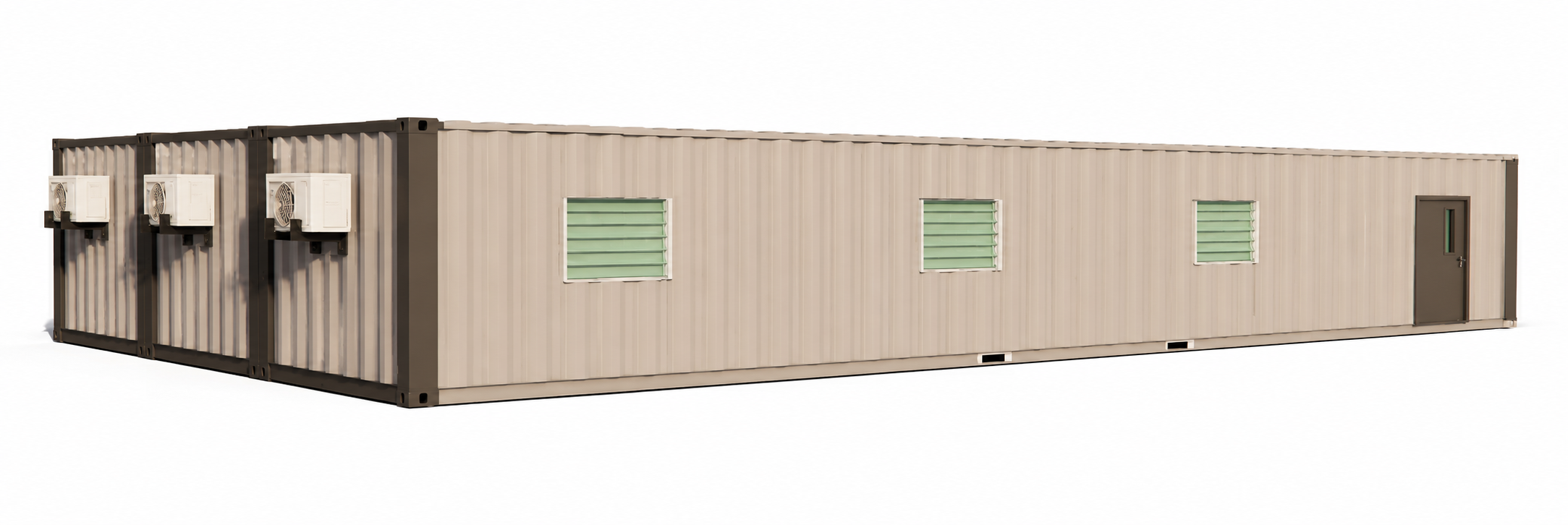
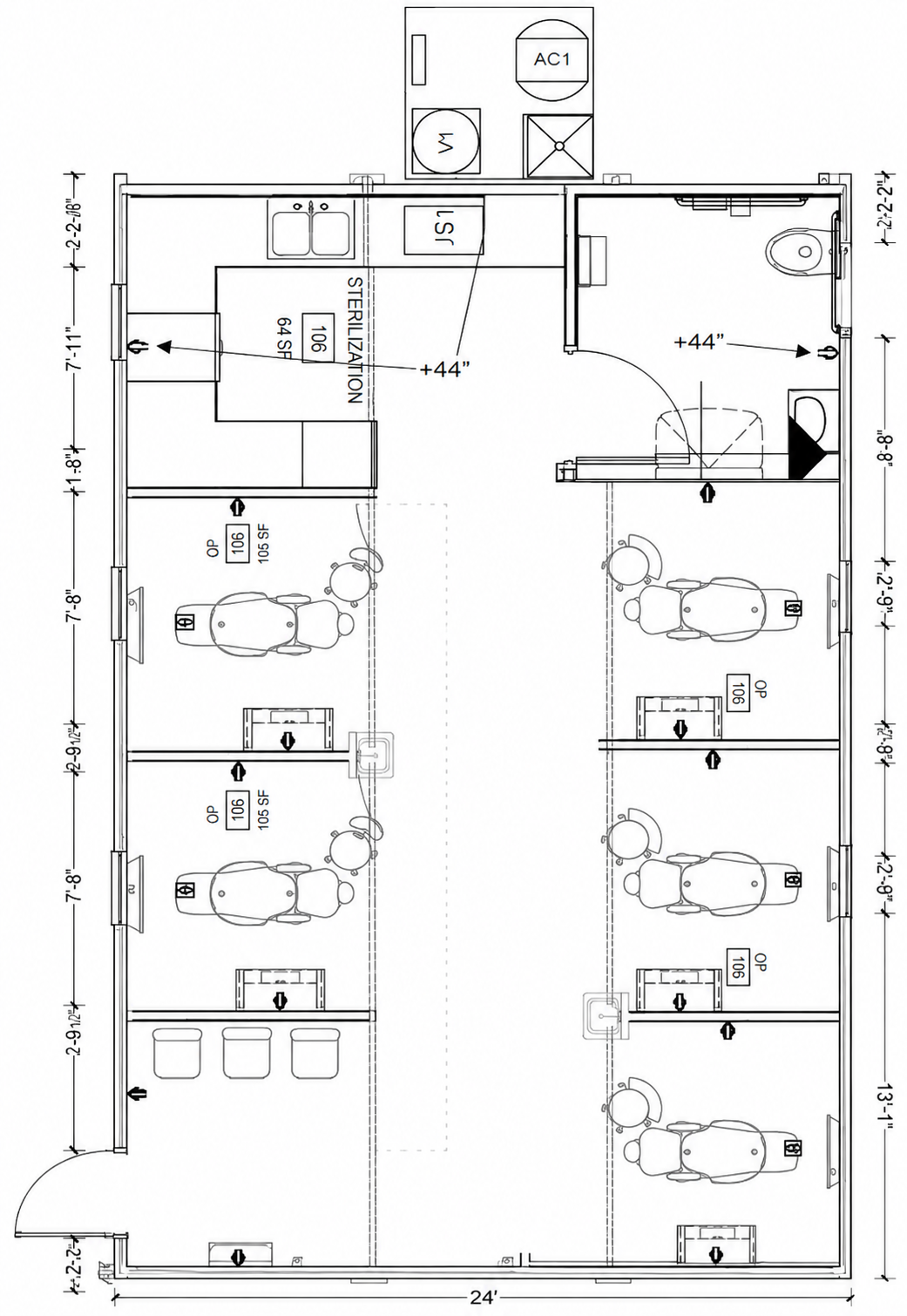
A 24′ × 40′ clinic, ready to deploy.
When a permanent build isn't an option, the Flextainer container office brings a fully-equipped, open-layout dental space on-base.
Unit Specifications
24′ × 40′ Open LayoutStructure & Dimensions
Mechanical & Electrical
Interior Finishes
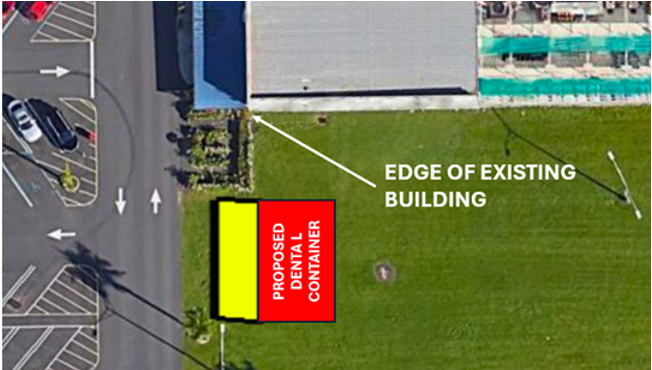
Inside the unit — and where it lands.
Evaluating AI tools for clinical decision support.
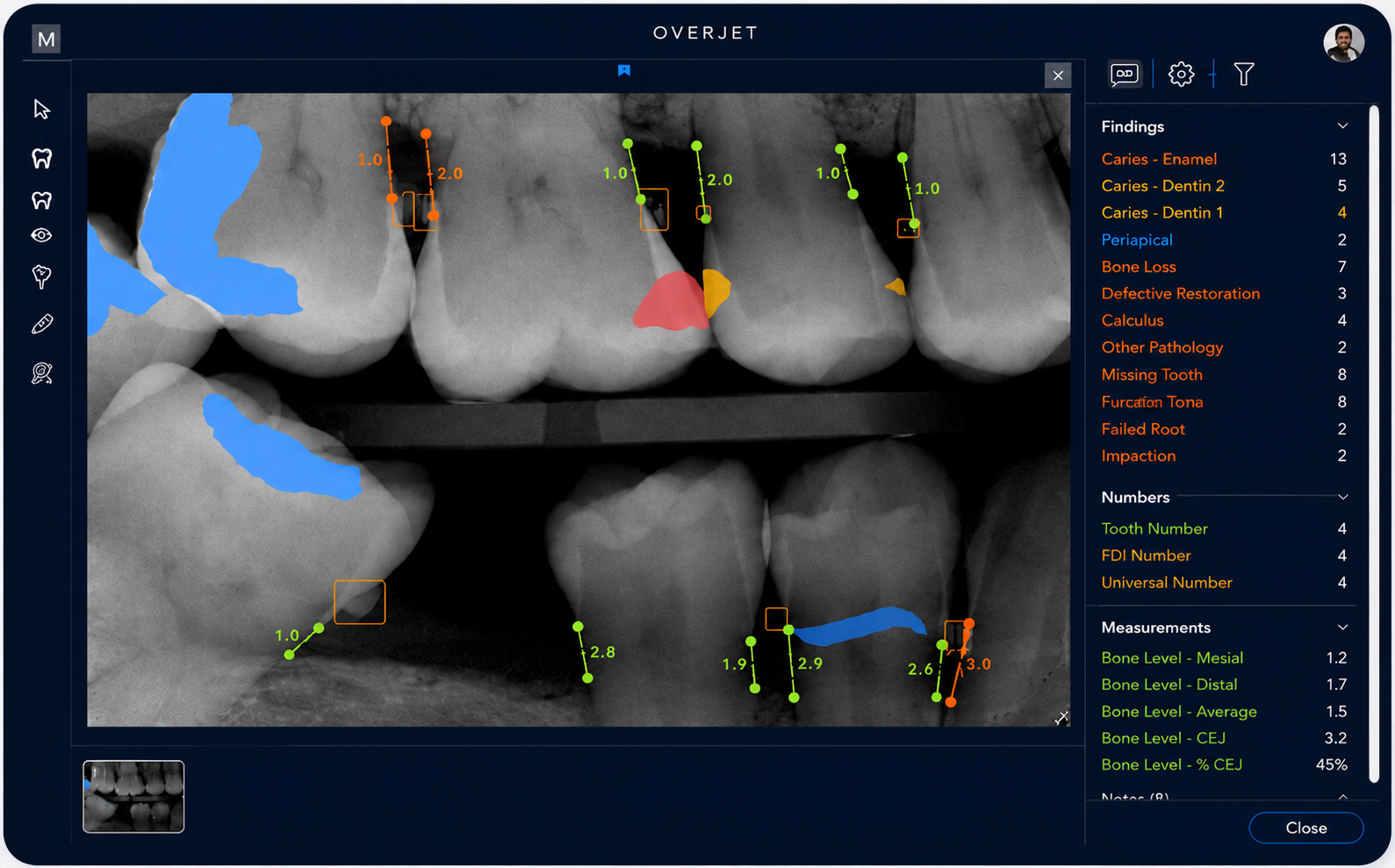
DOCS is assessing leading dental AI platforms that can support radiographic review, strengthen documentation, improve patient understanding, and help clinicians present treatment with greater clarity and consistency.
Overjet
- Supports radiographic review and identification of clinical findings
- Helps standardize documentation across providers and locations
- Strengthens insurance, claims, and audit-ready workflows
Pearl AI
- Supports chairside radiograph review in real time
- Helps patients see and understand clinical findings more clearly
- Strengthens diagnostic confidence, treatment conversations, and case presentation
The goal is not to replace clinical judgment — it's to give clinicians clearer evidence, stronger documentation, and better tools for patient communication.
Smarter tools. Clearer care conversations.
AI-assisted imaging can help clinicians review radiographs more consistently, explain findings more clearly, and strengthen documentation — without replacing clinical judgment.
Accountable
at every level.
Performance is measured at the network, location, and provider level — giving DOCS clear visibility into what is working, where support is needed, and where to focus next.
Monthly visibility across every role.
DOCS tracks performance by location and role so leaders can see volume, productivity, access, and production trends before small issues become operational gaps.
The purpose is simple — make performance visible early enough to support the team, protect access, and improve outcomes.
From measurement to management.
KPIs are not just for reporting. They create faster decisions, clearer accountability, and better support across every office, provider, and hygiene team.
Every role uses the same scorecard logic — so support goes where performance needs it, not where it is loudest.
The path
forward.
A shared operating agenda for the next cycle — aligning access, quality, patient experience, and growth around clear priorities.
Six steps, one shared roadmap.
The goal — align on the next operating cycle so access expands, quality stays protected, and performance remains visible.
Approve expansion requests
Three installations are requesting DOCS care on-site. Approval unlocks new access for the military communities AAFES serves.
Deploy the Flextainer at Laughlin
A 24′ × 40′ mobile clinic creates on-base dental capacity when a permanent build is not immediately available.
Select the AI partner
Conclude the Overjet vs. Pearl evaluation and choose the platform that best supports radiographic review, documentation, and patient communication.
Ready the August System Survey
The Joint Commission System Survey is scheduled for August 2026. DOCS will prepare surveyed sites with special focus on the four sedation clinics.
Sustain RHRP growth
RHRP delivered strong 2025 growth and continues to be a meaningful contributor to specialty production, appointment volume, and readiness-related access.
Reaffirm KPI cadence
Shared scorecards keep DOCS and AAFES aligned on office, provider, and hygiene performance — with the same targets reviewed every month.
Where can we go further together?
The data shows strong progress. The next opportunity is deciding where alignment can unlock more access, stronger experience, and smarter growth.
Where does AAFES see the greatest unmet access need?
Which installations should we prioritize for expansion or mobile deployment?
What visibility would be most useful for AAFES leadership each month?
How should DOCS and AAFES use patient intelligence to improve care faster?
Stronger access. Stronger trust. Stronger communities.
Together, DOCS and AAFES are not simply operating dental clinics — we are building a scalable, trusted, intelligence-driven care network for America's military families.